Why we're asking employers and community partners
Immersive training is arriving in the workplace faster than the evidence about what it's good for. In our student research, interview scores rose and anxiety fell. What it can't tell us is whether the people who run hiring, training, onboarding, and workforce programs find the experience usable, credible, and worth their time. Employers and the community organizations that prepare people for work see different sides of that question, and we want both. That judgment has to come from you, and critical reactions are the most useful ones.
For nonprofits and community organizations
This is a free, one-hour chance to see whether immersive interview practice could help the people you serve. You choose what the interview practices, such as the entry-level interviews your job seekers face or a conversation your staff handle every day. Your feedback shapes a tool that is usually designed without community organizations in mind, and the group discussion puts you in the room with local employers. The session is for your staff; it asks for your judgment, not your clients' time.
What your visit looks like
One visit to the CCSU XR Lab, about an hour. The middle of the visit is the protocol from our student research, run with the meditation our team built at CCSU.
- Check-in questions. A few quick questions, answered in the headset.
- AI mock interview, 7 minutes. An interview with an AI interviewer in VirtualSpeech, built around the scenario you choose, which scores your answers.
- Guided meditation, 5 minutes. Box breathing in a VR environment our team built in Uptale, a no-code platform that turns 360° video into VR. Every scene was filmed in Connecticut.
- Second interview. Another VirtualSpeech session, so you can feel the before and after.
- Check-out questions. A few more, plus your first impressions.
Trying the headset is optional. Observing works too, and you'll still have plenty to say in the discussion.
Briefing about 10 minutes
The study, the protocol, and what we want your honest read on.
Group discussion about 30 minutes
Five or six partners from employers and community organizations, two questions: how was the experience, and where could it earn a place in training, onboarding, hiring preparation, job-readiness programs, or workforce development?
Your interview, your scenario
The AI interview doesn't have to be a generic one. Tell us what you want it to practice, and we'll build the VirtualSpeech scenario before your visit. It can be whatever you want it to be, for example:
- The questions you ask candidates for a role you're hiring
- The interviews the people in your program are preparing for
- Another conversation your people need to practice, such as a client intake or a difficult customer call
You, and anyone you bring from your organization, try the scenario you chose. The meditation between the two interviews stays the same in every session. If you'd rather not choose, we'll run our standard mock interview.
Where the research stands
The partner sessions are the third step in a program of research that began in 2025 in the CCSU XR Lab. Status as of October 2026.
-
Study 1, 2025–2026
Meditation between two AI mock interviews
Data collected; analysis and write-up underwayCCSU students completed two AI-powered mock interviews in VirtualSpeech, with a short box-breathing meditation between them, delivered either in VR or in person by a researcher. From the first interview to the second, interview scores rose, state anxiety fell, and attitudes toward VR and AI became more positive. VR and in-person meditation produced similar results.
Practice alone can raise a second score, so in spring 2026 we added a comparison group that rested to music instead of meditating. That analysis, which separates the effect of meditation from the effect of practice, is underway. Three undergraduate co-authors presented early results with me at the Eastern Psychological Association's 2026 Annual Meeting in Boston.
Statistics for researchers
Two-condition results (VR vs. in-person meditation). Interview performance, first to second session: F(1, 102) = 34.10, p < .001, partial η² = .251. VR vs. in-person: F(1, 102) = 0.71, p = .402, partial η² = .007. Attitudes toward VR: F(1, 114) = 82.45, p < .001, partial η² = .420. Attitudes toward AI: F(1, 114) = 40.66, p < .001, partial η² = .263. State anxiety, controlling for trait anxiety: F(1, 113) = 15.92, p < .001, partial η² = .123.
A nonsignificant difference between VR and in-person meditation is not evidence that they are equivalent; a formal equivalence test is planned with the three-group analysis.
-
Study 2, 2026–2027
A VR meditation built at CCSU
Data collection underway since October 2026Commercial VR meditation apps run on subscriptions and can't be customized. We built our own in Uptale, a no-code platform for building interactive VR from 360° video. A psychology research assistant filmed high-quality 360° video at locations across Connecticut, recorded the box-breathing meditation, and helped assemble it in Uptale. This year's validation study, which began collecting data in October 2026, randomly assigns CCSU students to one or the other and compares state anxiety and attitudes toward VR and AI, with every survey answered inside the headset.
-
Study 3, spring 2027
Employer and community partner sessions
Inviting partners nowEmployers and community organizations experience the protocol, with an interview built around their own scenario and the CCSU-built meditation, and tell us how usable, credible, and relevant it is for workforce development, training, onboarding, and hiring preparation.
Who we're looking for
About 20–30 representatives of employers and community organizations, such as nonprofits and workforce and job-readiness programs, across four or five small groups of 5–6. Each has a stake in hiring, training, onboarding, or preparing people for work. Several people from one organization are welcome, since different roles see different value. If you've toured the XR Lab or asked about VR training, start here.
Sessions are built around your schedule. They can run as a standalone visit or right after a campus event you're already attending, such as a career fair, a convening, or a Hub program.
What we ask
- One session, 60–75 minutes, on campus
- Your candid reactions; critical ones are the most useful
- That's the whole commitment
What you get
- A hands-on first look at the protocol before it goes further
- An AI interview built around the scenario you choose
- A tour-level visit to the CCSU XR Lab
- A direct line into research shaping workforce tools; your feedback steers the design
- A seat alongside peers from other organizations comparing notes on training, onboarding, and preparing people for work
How to take part this fall
-
Send us a note
Tell us your name, organization, role, and the weeks that work for you in February or early March, and what you'd like the interview to practice. Prefer an introduction? Nesha Jalaludin at the Central Workforce and Innovation Hub can connect you.
Email to hold a spot -
We follow up with dates
We handle scheduling and logistics, and we can pair your visit with a campus event you're already attending.
-
Visit the XR Lab
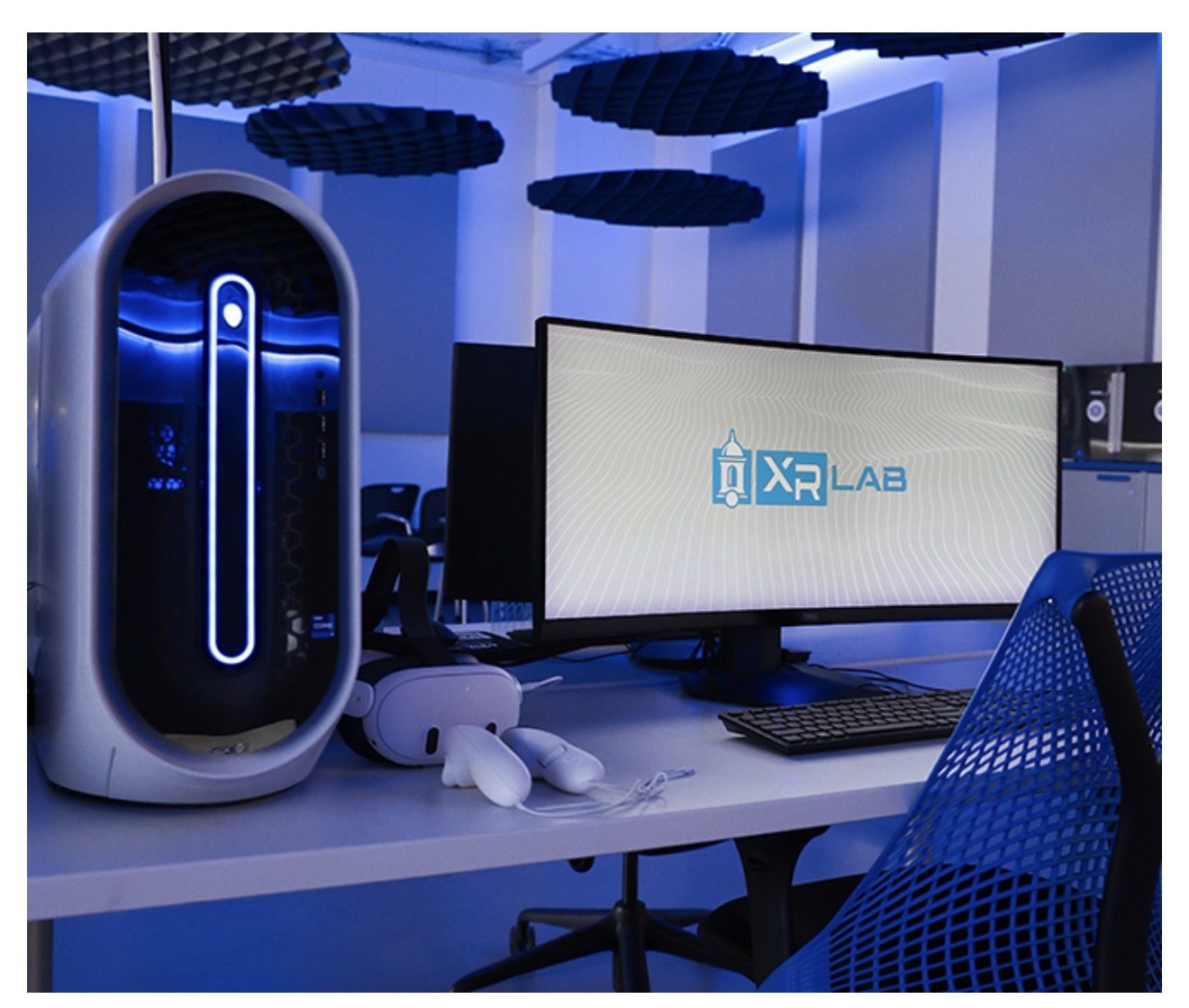
Plan on 60–75 minutes at the Applied Innovation Hub on CCSU's New Britain campus.
Common questions
- Can the interview fit what my organization does?
- Yes. Tell us the role, the questions, or the conversation you want to practice, and we'll build the scenario before your visit. If you'd rather not choose, we'll run our standard mock interview.
- Do I have to wear the headset?
- No. Observing works too.
- What if VR makes me uncomfortable?
- Some people feel mild discomfort in a headset. You can take it off at any time.
- Will my name or organization appear in the results?
- No. Reports describe participants by role and sector only.
- Can several people from my organization come?
- Yes. HR, a hiring manager, a training lead, or a program coordinator often notice different things.
- Is this research reviewed?
- Yes. The partner sessions are reviewed by CCSU's Institutional Review Board before they begin, and participation is voluntary.
- Who funds the work?
- A 2026–2027 CSU-AAUP Faculty Research Grant. There is no cost to participants.
Contacts
 OPALOrganizational Psychology Answers Lab